

The Boards of Trustees
Mount Sinai was founded on January 15, 1852, by nine trustees who aimed to provide free medical care for indigent Jews in New York City, later expanding care to all. Since then, the leadership, philanthropic support, and the dedication of its Boards of Trustees have kept Mount Sinai at the forefront of medical innovation, education, and patient care, fostering excellence and compassion.

Champions of Philanthropy
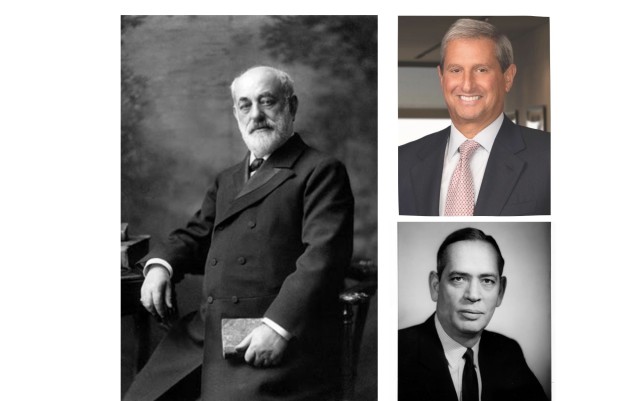
Mount Sinai’s growth and evolution is closely intertwined with the legacy of the Trustees. The leadership of recent chairs Peter W. May (2002-2019) and James S. Tisch and Richard A. Friedman (2019-2026) oversaw transformative milestones.
Trustee Leadership in Action





Giving Societies
Join a community of like-minded science and health supporters.
Legacy Society
The esteemed Legacy Society honors those who have demonstrated their commitment to our institution by making a planned gift to Mount Sinai.
Summit Society
The Mount Sinai Summit Society is a group of generous community members who help sustain our lifesaving research and clinical care through monthly giving.

Philanthropic Councils and Boards
Volunteer leaders are integral to the success and growth of the Mount Sinai Health System. Focused on key areas across the institution, volunteer leaders on Advisory Boards and Philanthropic Leadership Councils serve as trusted advisors, generous supporters, and fervent champions of both their specific areas and the health system as a whole.
The benefits of philanthropic leadership include insider perspectives on leading-edge technologies and innovations in health care, unparalleled access to subject matter experts through regular board meetings and social events, and the opportunity to make a profound and lasting impact at Mount Sinai.
The Department of Otolaryngology-Head and Neck Surgery at the Icahn School of Medicine at Mount Sinai is a leader in clinical excellence and scientific innovation. As part of our deep commitment to scholarship and growth, the Department has convened the All Things Health Chairman’s Council that fosters meaningful educational opportunities for members while furthering the Department’s mission through strategic resources. The Council represents a new vision for volunteer involvement within academic medicine—one built on the power of intellectual capital to improve the health of individuals and communities and advance science and care. The Department of Otolaryngology-Head and Neck Surgery has the foresight, dedication, and talent needed to make a transformational difference in medicine and personal health.
The BioMedical Engineering and Imaging Institute (BMEII) leverages the advancements made by the Translational and Molecular Imaging Institute's imaging and nanomedicine programs to establish a broad biomedical engineering research and development program as well as training opportunities for graduate and medical students. The focus of the BMEII will be in medical imaging, nanomedicine, artificial intelligence, sensor technologies, next generation medical devices, robotics, and computer vision. Members understand the importance of advancing this work through their philanthropic support and active involvement, and demonstrate a commitment to the mission of the BMEII and its vision for the future of health care.
Mount Sinai’s Bonnie and Tom Strauss Movement Disorders Center (SMDC) is dedicated to transforming the conventional research and care paradigm for movement disorders. The SMDC is at the forefront of the rapid innovation occurring across neuroscience, which allows us to devise more effective and individualized therapies for movement disorders. The board comprises individuals who have been touched personally by and/or understand the importance of advancing the diagnosis, prevention, and treatment of movement disorders in New York and globally. Through their philanthropic support and active involvement, board members demonstrate a commitment to the mission of SMDC and its vision for the future.
We believe that a multidisciplinary approach to urologic cancer prevention and treatment will one day put an end to the disease. Through a range of programs spanning advances in genomics, immunotherapy, and novel surgical advances, our team is building on Mount Sinai’s extraordinary history of medical breakthroughs to offer new hope for those living with or at risk of urologic cancer. Members help advance this mission and provide ongoing council as well as serve as a resource to the Department.
The Child Psychiatry Advisory Board comprises individuals who have a passion for advancing Mount Sinai’s mission of excellence and innovation in patient care, research, and education. Each member serves as an ambassador, advisor, and philanthropic partner to the Child Behavioral Health and Science Center. Members commonly have experienced the support of Mount Sinai’s Child and Adolescent Psychiatry services and/or understand the importance of advancing care for children, adolescents, and their families. Through their philanthropy and active involvement, board members demonstrate a commitment to the mission of the Center and its vision for the future of mental health care.
The mission of the Children’s Center Foundation (CCF) is to address the real-time needs of children and families served by the Kravis Children’s Hospital and the Department of Pediatrics by providing strategic council, expertise, and philanthropic resources. The board works with the Chair to advance strategic priorities in the areas of clinical care, research, and education.
The Corinne Goldsmith Dickinson Center for Multiple Sclerosis at Mount Sinai is part of a system that is nationally recognized as a leader in clinical neurology, neurology education, and neurology research. It’s unique, comprehensive model of care includes leading-edge programs in diagnostics, disease management, experimental therapeutics and research, as well as specialized support services and rehabilitation. Through revolutionary basic science and groundbreaking clinical trial programs, the Center is working to translate new discoveries into effective therapies. The Multiple Sclerosis Advisory Board consists of individuals who serve as ambassadors, advisors, and philanthropic partners to the Center.
The Department of Surgery Advisory Board is a dynamic group of dedicated supporters who have joined our world-renowned surgeons to further our mission of sustained excellence and innovation in the field of surgery. Mount Sinai has long been a leader in performing advanced surgical techniques. Today, the Department of Surgery and its board members continue this strong commitment to surgical excellence, groundbreaking research, and global outreach.
The Department of Medicine at Mount Sinai is one of the largest, multidimensional academic training grounds in the country, encompassing 14 divisions across seven campuses. Some of these divisions include: Clinical Immunology Endocrinology, Diabetes and Bone Disease, Gastroenterology, General Internal Medicine, Genomic Medicine, Hospital Medicine, Infectious Diseases, Liver Diseases, Nephrology, Pulmonary, Critical Care and Sleep Medicine, and Rheumatology. The Department of Medicine Advisory Board is a dynamic group of dedicated supporters who partner with our world-renowned physicians and scientists to advance the mission of excellence and innovation in patient care, research, and education. The board works with the leadership team to advance the strategic priorities in the areas of clinical care, research, and education.
The Department of Neurosurgery at the Icahn School of Medicine at Mount Sinai, established in 1914, is at the forefront of clinical care, education, and scientific research in neurosurgery. Our neurosurgeons are internationally renowned for their expertise in skull base surgery, cerebrovascular disease, neurosurgical oncology, skull based tumors, neuromodulation by deep brain stimulation, complex spinal reconstruction, epilepsy, radiosurgery, as well as neuro-endoscopy. Our research teams work closely with our clinical teams, allowing us to rapidly translate research findings into new therapies and better approaches to patient care. The Department of Neurosurgery Advisory Board consists of donors and advocates who are dedicated to furthering the field of neurosurgery to help our patients tomorrow.
Mount Sinai’s nationally-ranked Department of Rehabilitation and Human Performance (DRHP) is dedicated to advancing human performance and breaking down barriers for those across the entire ability spectrum. From sprains and strains to severe spinal cord and brain injuries, our researchers, physicians, and staff deliver the highest level of evidence-based care—helping patients achieve their goals while redefining what’s possible in medicine. The Department of Rehabilitation and Human Performance Advisory Board comprises individuals who serve as ambassadors, advisors, and philanthropic partners. Members have been touched personally by and/or understand the importance of helping individuals with disabilities maximize their self-sufficiency while at the same time embracing our growing recognition as a leader in the exciting new direction of human performance. Through their philanthropic support and active involvement, board members demonstrate a commitment to the mission of DRHP and its vision for the future of healthcare.
The Dubin Breast Center, created in 2011, serves as a multidisciplinary, comprehensive hub for breast cancer screening, treatment, and survivorship. Representing a bold vision for patient care and research, the Dubin Breast Center focuses on the holistic health and well-being of individuals with or at risk for cancer. Patients receive highly personalized care in a calming, private, and supportive setting. Members of the Dubin Breast Center Advisory Board help drive this mission forward and are dedicated to changing the future of breast cancer globally.
The Jaffe Food Allergy Institute is committed to helping people with food allergies live safer and healthier lives through comprehensive care, education, and research to find a cure. The Institute provides a full spectrum of care for those with food allergies, including leading-edge diagnostics, treatment, education, and psychosocial support–and is recognized nationally and internationally for leadership and innovation in all aspects of basic, clinical, and translational food allergy research. The Jaffe Food Allergy Institute Advisory Board serves to advance the mission and vision of the Institute by supporting new initiatives, assisting in raising the Institute’s profile, and leveraging personal and professional networks to raise funds. The Advisory Board is composed of individuals who have an interest in rapidly advancing food allergy research and treatment by contributing financial support, expertise, and leadership. By serving on the Advisory Board, members are partners in the Jaffe Food Allergy Institute’s efforts to make a profound and lasting impact on people with food allergies.
The Friedman Brain Institute (FBI) is uniquely positioned to advance research into diseases of the brain and spinal cord. By evolving our understanding of such diseases, the FBI drives innovative approaches to new treatments and diagnostic tests for these disorders—while training the next generation of researchers and clinicians in leading-edge brain science. The Philanthropic Leadership Council (PLC) brings together individuals who have demonstrated an interest in and commitment to Mount Sinai’s efforts in advancing knowledge about the brain, spinal cord, and related areas of clinical care and research. PLC members – by definition – occupy a highly placed position. They interact with clinical and research leadership across the FBI; through this engagement, they gain a working understanding of diverse areas of science and medicine, deepen their knowledge of the FBI, and embrace its strategic priorities. They serve as advocates for the Institute, helping to build and strengthen it through their active partnership.
The Institute for Exposomics Research Advisory Board is composed of influential leaders committed to accelerating research on environmental exposures—from pre-pregnancy through adulthood—and partnering with a leading medical system to transform the health of babies, children, adolescents, and young adults. The Institute also seeks to unravel the causes of complex diseases that affect adults throughout their lives, including cancer, ALS, Parkinson’s, and Alzheimer’s disease. In addition to studying chemical exposures, Exposomics examines social factors such as poverty, lifestyle, and relationships, as well as the impact of climate change on health. Advisory Board members serve as ambassadors for this work, helping to advance the Institute’s mission and share its breakthroughs within their networks.
The Institute for Health Equity Research was created to study how systems have led to groups of individuals being disproportionately and unjustly impacted by inequitable policies and practices that lead to excesses in illness, suffering, and death. The Institute works collaboratively with an extensive network of patients, providers, payers, policymakers, and industry leaders to produce discoveries that translate into sustainable, scalable initiatives that impact real-world policies, systems, and environments. With guidance and philanthropic support from the Task Force, IHER more quickly identifies the root causes and magnitude of disparities, devises and tests innovative solutions, and takes concrete action in response to findings.
The Dermatology Advisory Board brings together the perspectives of dermatology patients, physicians, and advocates with an interest in understanding the origins and progression of skin diseases, championing innovative treatments, and pushing the boundaries of research and clinical care in dermatology. The Kimberly and Eric J. Waldman Department of Dermatology has long been a hub of clinical excellence and advancement—having grown to be the largest and one of the most impactful dermatology programs in the nation. Our physicians are world leaders in psoriasis, eczema, alopecia areata, skin cancers, skin aging, and many other skin conditions. Today, the Department is paving the way for therapeutic innovation and discovery for a multitude of conditions, furthering bench-to-bedside-and-back care that ultimately will benefit millions of patients the world over.
The largest academic palliative care center in the country, the Lilian and Benjamin Hertzberg Palliative Care Institute at Mount Sinai aims to improve the quality of life for persons living with serious illness and their families, and to advance the field of palliative care through exceptional clinical care, education, and research. The Lilian and Benjamin Hertzberg Palliative Care Advisory Board brings together the perspectives of business and community leaders who have an interest in promoting a robust intellectual exchange about medicine, personal health, and innovation and who are committed to advancing our vision for the future of palliative care through philanthropy and action.
The Marc and Jennifer Lipschultz Precision Immunology Institute at the Icahn School of Medicine at Mount Sinai (PrIISM) encompasses and integrates disease-focused immunological research programs and leading-edge technology centers. PrIISM is working to better understand the fundamental mechanisms by which immune cells promote disease progression and influence treatment response; to develop and implement novel technologies that improve disease diagnosis and treatment guidance; and to generate new therapies that modulate the immune system across a broad spectrum of medical conditions, including cancer and inflammatory, cardiovascular, and neurological diseases. Partnership is at the core of PrIISM’s approach. Compared with other immunology programs that concentrate primarily on basic science, PrIISM is unique for our collaborations with clinicians and relentless focus on translational research with direct patient impact. Board members help further this patient impact and serve as an ambassadors for this work.
The Mindich Child Health and Development Institute (MCHDI) Leadership Council is a group of individuals who have an interest in supporting rapidly advancing research to improve the lives of children. MCHDI facilitates leading-edge translational research dedicated to finding new therapies and cures for the most pressing health issues affecting children today. Members have the opportunity to engage more deeply in the work of the MCHDI through collaboration with our outstanding physician-scientists and researchers.
The Mount Sinai Parenting Center is dedicated to transforming pediatric health care and fostering the health and resilience of all children by promoting strong parent–child relationships and early brain development. It advances this mission by training health care providers, designing services for families in need, and conducting research to expand scientific understanding. The Mount Sinai Parenting Center Advisory Board champions and promotes this work, helping to engage and connect their networks in support of the Parenting Center and children’s health at Mount Sinai.
The Multiple Myeloma Advisory Board brings together the perspectives of business and community leaders who have an interest in promoting a robust intellectual exchange about multiple myeloma and are committed to supporting the mission through philanthropy with the singular purpose of saving lives from this disease. Members have an innate interest in advancing medicine for multiple myeloma (early detection, novel therapies, and groundbreaking research), exhibit the willingness to share intellectual and/or business acumen in pursuit of the Center of Excellence for Multiple Myeloma’s goals, and are innovative thinkers who understand the transformational impact philanthropic investment can have on medical breakthroughs and human health.
The Obstetrics, Gynecology, and Reproductive Science Advisory Board brings together the perspectives of business and community leaders who have an interest in promoting a robust intellectual exchange about medicine, women’s health, and innovation and who are committed to advancing our vision for the future of care through philanthropy and action. They see obstetrics and gynecology as a gateway to improving the overall health of women and families everywhere—no matter who they are, what they look like, or where they come from.
The Seaver Autism Center for Research and Treatment Advisory Board is a group of dedicated stakeholders—parents, grandparents, siblings, and others—who want to learn more and do more to support their loved ones with autism and to support the work at the Seaver Autism Center for Research and Treatment. The board serves as a means to drive the Center’s mission forward and contribute to the strategic plan.
The SP and Seema Lohia Cardiovascular Clinical Institute (CVCI) is among the world’s leading institutions for cardiovascular medicine and research. By integrating a multidisciplinary approach with our subspecialty clinicians, our team is able to treat heart disease across the lifespan, with an emphasis on patient education, prevention, early detection, and revolutionizing novel treatment options. The CVCI Advisory Council addresses disparities in cardiac care, bridges the gap between basic and translational research efforts, and invests in resources to provide our patients with safe and effective care.
The mission of the Valentin Fuster-Mount Sinai Foundation for Science, Health and Empowerment, Inc. Board is to dramatically improve the cardiovascular health of local and global communities. To pursue this mission and have the greatest impact, the Foundation—through the Mount Sinai Fuster Heart Hospital—embraces both national and international collaboration. Its connection to the Mount Sinai Fuster Heart Hospital enables the Foundation to bring together renowned physicians, researchers, and educators from across the globe to provide advanced and compassionate clinical care; to conduct research for cardiovascular health and medicine and the treatment of heart disease, including coronary artery disease, atherosclerosis, and thrombosis; and to study wellness and prevention. Dr. Fuster’s lifetime goal has been to eliminate the preventable cardiovascular disease through early education, research and treatments creating healthier lifestyles and impacting generations to come.
The Windreich Department of Artificial Intelligence and Human Health has the vision to build an AI framework to underpin all efforts throughout the Mount Sinai Health System. This “intelligent fabric” will weave together AI services that support nurses and physicians, scientists and administrators. Within the hospital system, we have relationships with key partners such as the Data Warehouse and Office of Chief Research Informatics. However, we also seek thoughtful volunteer leadership to help us realize our ambitious goals. The advisory board brings together the perspectives of business and community leaders who have an interest in promoting a robust intellectual exchange about medicine, technology, and innovation and who are committed to advancing our vision for the future of care and research through philanthropy and action.