More than 30,000 people in the US are diagnosed with multiple myeloma each year, making it the second most common blood cancer—albeit a rare and complex one that has a great ability to survive and elude therapeutic interventions. It is twice as common in the Black community as in other ethnicities, and genetics and immune changes contributing to high-risk disease have not been explained.
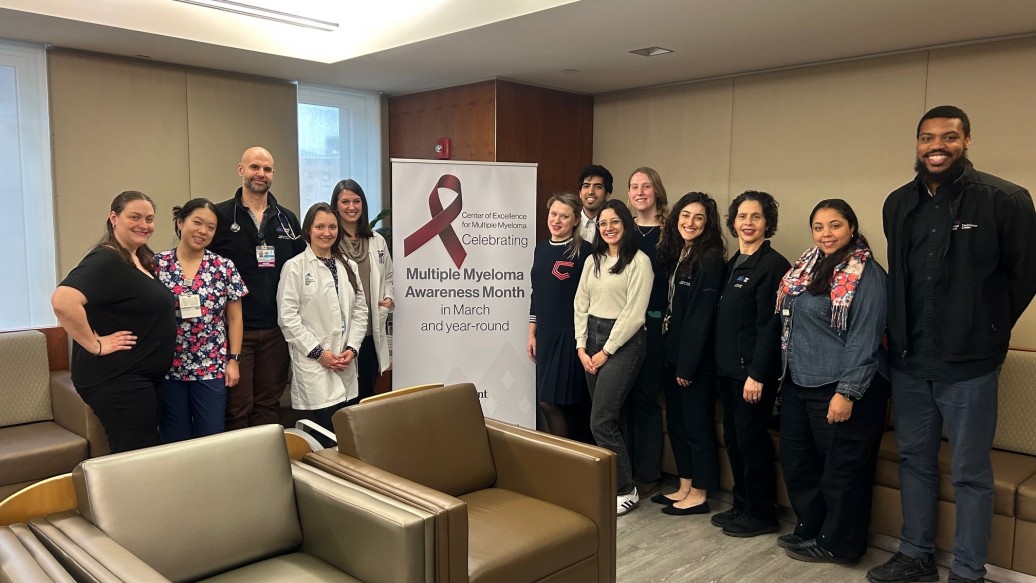
As one of the country’s largest multiple myeloma programs, the Center for Excellence in Multiple Myeloma at the Tisch Cancer Center at Mount Sinai is poised to change this by bringing together physicians, scientists, patients, families, and donors to realize one collective goal: improving the lives of everyone with myeloma.
Philanthropy has been crucial in advancing immunotherapy and genomics research, leading to new therapies and innovative approaches to overcome treatment resistance. Samir Parekh, MD, Director of the Center, notes, “Donor support is vital to our efforts, and we are tremendously grateful for the direct role of philanthropy in helping patients at Mount Sinai and throughout the world.”
I donate to the Mount Sinai multiple myeloma program for the simplest of reasons: the doctors and nurses there saved my life.
John Gluck
Author of “An Exercise in Uncertainty,” a memoir about his myeloma journey
Such advances in translating research from the laboratory to the bedside have been nothing short of life-saving for patients like Jon Gluck:
“I donate to the Mount Sinai multiple myeloma program for the simplest of reasons: the doctors and nurses there saved my life. In 2023, twenty years and many treatments after I was initially diagnosed with myeloma, my disease was advancing at a concerning rate. Dr. Sundar Jagannath recommended a cutting-edge treatment being offered at Sinai called CAR-T therapy, and Dr. Shambavi Richard, Dr. Tarek Mouhieddine, nurse practitioner Danny Verina, and dozens of others on the Sinai team led me through that complex and difficult protocol. The result was a complete remission—my first in many years. Although no amount of money can sufficiently express my gratitude to the Sinai team, I try to do what I can to help.”
Private gifts expand promising investigations and enable applications for significant grants. For example, philanthropy led to a $7 million grant from the Multiple Myeloma Research Foundation for a three-year project to improve outcomes for high-risk myeloma patients. Success in securing this funding is entirely due to the incredible generosity of our donors.