In the bustling heart of Mount Sinai’s Neonatal Intensive Care Unit (NICU), a groundbreaking project is unfolding, one that promises to change the lives of our tiniest and most vulnerable patients.
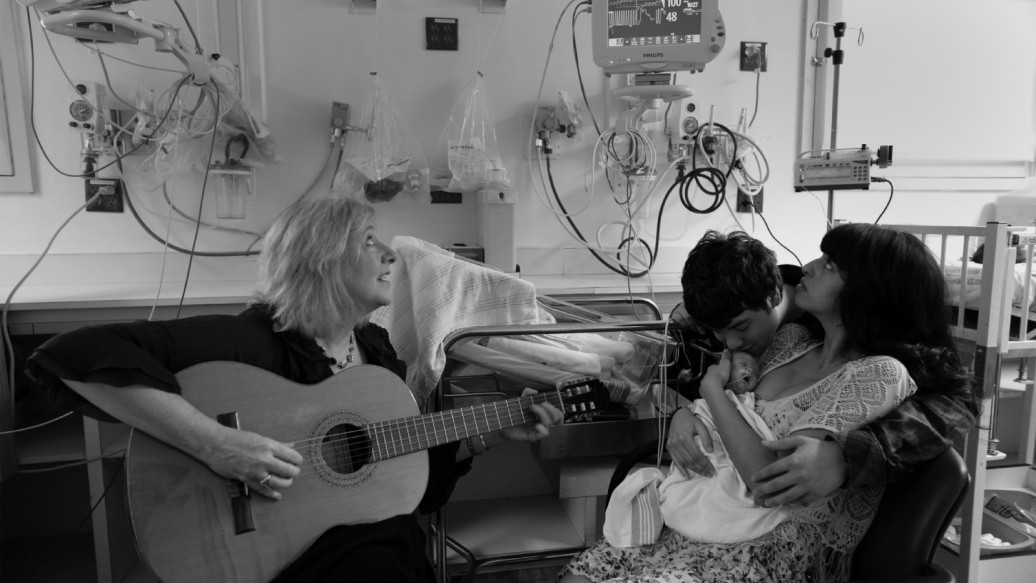
One recent research project at The Louis Armstrong Center for Music and Medicine at Mount Sinai lies in the concept of “song of kin,” where parents or caregivers select a meaningful, culturally relevant, or personally significant piece of music, often a lullaby, which music therapists then use as a therapeutic intervention. The hypothesis is simple yet profound: when preterm babies hear this song, it will improve their respiratory function, leading to enhanced neurocognitive development.
This practice is not just about babies. Such interventions have been shown to reduce parental stress and anxiety, help families transition the infant home from the NICU, and provide valuable insights for NICU staff to incorporate these interventions into routine care.
“By integrating and entraining familiar and culturally meaningful music, we hope to build healthier outcomes for preterm babies and strengthen the parent-child bond at a critical developmental stage,” explains Dr. Loewy.
This enables our team to advance research that explores how parent-supported music therapy can strengthen respiratory function and neurodevelopment in our most vulnerable infants.
Joanne Loewy, DA, LCAT, MT-BC
Professor at the Icahn School of Medicine at Mount Sinaifounding Director of the Louis Armstrong Center for Music and Medicine
This initiative, supported by a generous $257,000 gift from TMCity Foundation, aims to explore the profound impact of “song of kin” on the respiratory function of preterm babies. The funds will support two dedicated music therapists who will study the role of entrainment—the synchronization of an infant’s physiological rhythms, such as breathing or heart rate—in live music therapy interventions to promote stability and regulation. Using technologically advanced monitors that measure lung volume capacity, the collected data will then be evaluated. The expected outcomes are promising, with the potential to revolutionize the standard of care in NICUs worldwide.
“TMCity is excited to support this important research into the benefits of music therapy for neonatal infants,” said Belen Cox, Executive Director of Philanthropy at TMCity Foundation. “We believe this work will build the evidence base for effective NICU treatments and make a meaningful impact on how we care for the development of vulnerable babies.”
TMCity Foundation is committed to funding cutting-edge research opportunities and transformative technologies that can advance our understanding of the brain and create innovative, real-world solutions to neurocognitive health care problems, making this project is a shining example of what can be achieved when like-minded organizations come together.
“We are extremely grateful to the TMCity Foundation for their generous support and belief in the power of music to transform neonatal care,” said Joanne Loewy.
As the project unfolds, the findings will not only benefit the babies at Mount Sinai but also inspire other institutions to explore the healing power of music. This initiative is more than just a research project; it is a beacon of hope for families and a testament to the transformative, healing power of music.
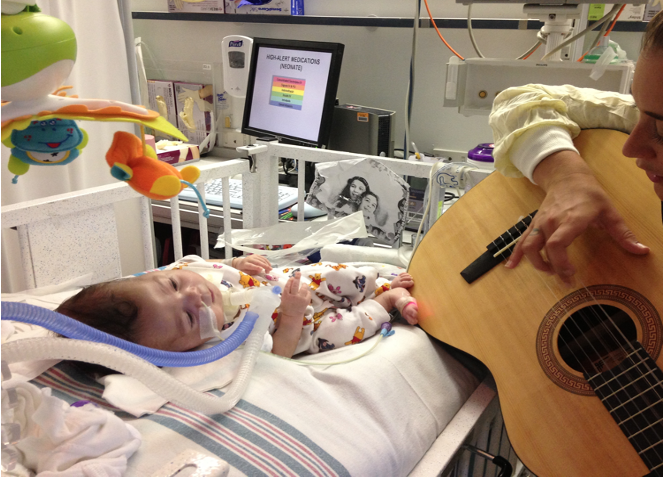
A NICU music therapy session in progress.
Music Therapy Research Projects
As part of the mission at The Louis Armstrong Center for Music and Medicine, we conduct research in music and medicine to support evidence-based music therapy practices. Highlighted projects are below, and more information can be found here.
Our specialist level music therapy team leads our hospitals along with 13 other sites in a study investigating the effects of music therapy interventions for premature infants with Neonatal Abstinence Syndrome (NAS). This five-year study explores the use of live music therapy interventions with premature infants and their parents. To find out more or enroll, go to our NICU page.
The purpose of this exploratory pilot multi-site study is to learn what, if any, effects live music therapy interventions have on the pacification, stabilization, and development of infants diagnosed with Neonatal Abstinence Syndrome (NAS). Neonatal Abstinence Syndrome is a group of problems that occur in a newborn who has been exposed to illegal or prescription opiates while in the mother's womb. Participants will receive 6 music therapy sessions over a 14-day period based on a randomized treatment schedule of 6 different interventions.
This study compares different music therapy (MT) experiences and their impact on memory and language in patients with Alzheimer's disease and Mild Cognitive Impairment. The 12-month study will assess the role of common experiences involving familiar music and other pleasant events (blinded control) to benefit cognition and measure the quality of life for people with Alzheimer's disease and Mild Cognitive Impairment. Following screening, all participants will meet with a licensed music therapist at the first study visit. Thereafter, each group will have an individualized schedule of follow-up telephone calls and visits. Screening for the study and participation in the study intervention can be completed in-person or from your home, if you do not live in the area.
This study asks the question: Does music therapy, specifically entrainment and Song of Kin (SOK), have any effect on the comfort, pain perception, sedative requirements, length of time spent on ventilator, and length of time spent in the hospital for patients on mechanical ventilation the Intensive Care Unit (ICU)? This study is also being conducted at another hospital and is the first of its kind looking at patients on mechanical ventilation using live music.
This is a two-fold study looking at the experience of people who have endured a stroke and their caregivers. Participants attend a weekly music therapy group focused on group singing. The study is looking at the effect of group singing on quality of life, language, and cortisol and melatonin levels of stroke survivors and the effect of group singing on quality of life for caregivers. To find out more or to enroll, contact Marie Grippo at marie.grippo [at] mountsinai.org (marie[dot]grippo[at]mountsinai[dot]org). See our brochure.
This study also stems from our team’s rigorous research showing the power of live music to reduce stress and improve outcomes. Music is one of the earliest, most traditional art forms in human history, while metabolomics is one of the newest and most advanced technologies available in the world today. We have the opportunity to identify a means by which the beneficial effects of live, culturally relevant music chosen by a pregnant woman and implemented therapeutically, can reduce the biological impact of the daily stressors to which she is exposed, and as a result, reduce one of the most persistent health disparities of our time, PTB.
In partnership with Carnegie Hall’s Weill Music Institute, AMEND is a two-year interdisciplinary initiative at Mount Sinai investigating how music and music therapy can address depression across vulnerable populations, including children, adolescents, college students, new parents of preterm infants, and older adults with mild cognitive impairment. The study will measure outcomes such as mood, resilience, sleep, and quality of life through concerts, music therapy sessions, and standardized assessment tools. In Year 3 the lab is partnering with Third Street Music School.
We have created an National Endowment for the Arts lab called AMEND: where we studying the impact of Assessment of Music Therapy Experiences in Navigating Depression in vulnerable cohort populations. Learn more.
Supporters
Since 1994, programs at The Louis Armstrong Department of Music Therapy at Mount Sinai have received funding through a generous grant from the Louis Armstrong Foundation. We have been fortunate to receive additional funding from a variety of organizations including: the Wonderful World Friends of Music Therapy Inc, the Gary Dial Fund, NYFE (New York Foundation for Elder Care), Charles Lawrence Keith and Clara Miller Foundation, the Grammy Foundation, the Heather on Earth Music Foundation, the Remo Foundation, the Helen Sawaya Fund, and various estates directed by the late hospital trustee Richard Netter. These donations have enabled us to explore rich, new, and exciting clinical areas and community research endeavors.